
"tropical highland coffee"
1000 article(s) found

What kinds of coffee beans do you have?
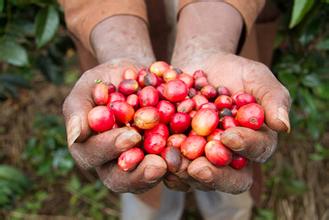
Coffee trees are small shrubs growing in tropical highlands. Their fruits are red or yellow, and the seeds inside are what we call coffee beans. At present, coffee beans are grown in about 66 countries in the world, among which they can be classified as Arabica, Robusta and Liberica. Arabica is the largest major variety of coffee beans, accounting for about 80% of its aroma and quality. And

Common cultivated varieties of coffee, types of coffee beans
Coffee trees are small shrubs growing in tropical highlands. Their fruits are red or yellow, and the seeds inside are what we call coffee beans. At present, coffee beans are grown in about 66 countries in the world, among which they can be classified as Arabica, Robusta and Liberica. Arabica is the largest major variety of coffee beans, accounting for about 80% of its aroma and quality. And

The flavor characteristics of Central American Honduran coffee beans
Honduras is a mountainous country located in northern Central America. It is bordered by the Caribbean Sea to the north, the Gulf of Fonseca in the Pacific Ocean to the south, Nicaragua and El Salvador to the southeast, and Guatemala to the west. More than three-quarters of the territory for mountains and plateaus, mountains extend from west to east, inland lava plateau, multi-mountain valley, coastal plains. Tropical climate, coastal plains are tropical rain forests

Coffee knowledge the growth trainee of coffee trees
Coffee trees belong to the evergreen family of Akanaceae. They are tropical plants that are not cold. Most of them are planted in areas with elevations of 300,400m, and also in highlands with elevations of 2000-2500 meters. But those who plant on slopes above 1500 meters above sea level have better quality. Coffee trees are most suitable for growth when the average temperature is about 20 degrees Celsius, the annual precipitation is 1500-2000 mm, and the soil is permeable.

A brief introduction to the Market Price of Fine Coffee Bean varieties in Santa Barara Manor, Honduras
So there are two kinds of very good quality coffee produced in Honduras, one is the highland coffee grown at an altitude of 1000 to 1500 meters, and the other is the selected highland coffee growing at an altitude of 1500 to 2000 meters, which represents the highest level of selected highland coffee in Honduras. Most of them are exported to the United States and Germany. Although Honduran coffee does not have very distinct characteristics, but as a whole

Types and characteristics of coffee beans how many kinds of coffee beans are there
Coffee trees are small shrubs growing in tropical highlands. Their fruits are red or yellow. The seeds inside are what we call coffee beans. At present, coffee beans are grown in about 66 countries in the world, among which they can be classified as Arabica, Robusta and Liberica. Arabica is the largest major variety of coffee beans, accounting for about 80% of its aroma and quality. And Robusta

Flavor and taste characteristics of Papua New Guia Coffee Manor introduction to Fine Coffee Bean Paradise Bird Manor
The southern part of Papua New Guinea is composed of plains and lowlands, the central part is the central mountain system, and the northern mountain is parallel to the mountain system, consisting of several separate mountains. [3] except for the mountain climate above 1000 meters above sea level, Papua New Guinea belongs to the tropical rain forest climate in the other lower elevations. The dry season is from May to October and the rainy season is from November to April. the average temperature in the coastal area is 21.1-32.2 ℃.

The flavor and taste characteristics of the coffee farm in Papua New Guinea located in the tropics introduce the Paradise Bird Village.
However, it is almost inevitable that the surge in production leads to a decline in quality. Before 1991, the quality of coffee was good, and most of it belonged to open Y and so on. After 1991, the quality gradually declined, and then the European market was lost.

Balanced flavor and taste characteristics of Antigua coffee in Guatemala A brief introduction to the cultivation of manor production areas
[characteristics] High acidity, pleasant, high alcohol thickness, rich volcanic soil with wine aftertaste of Antigua coffee, low humidity, plenty of sunshine, cool night, are the characteristics of this producing area. The valley is surrounded by three volcanoes: Agua, Fuego and Acatenango. The volcanic ash from the eruption caused the soil of Antigua.

Robusta coffee beans taste really bad? Where are Robusta coffee beans produced?
Professional coffee knowledge exchange More coffee bean information Please pay attention to coffee workshop (Weixin Official Accounts cafe_style) Qianjie-Robusta coffee bean introduction Vietnam is located in Southeast Asia, belongs to tropical and subtropical climate. The climate is divided into three regions: north subtropical humid climate, south-central tropical monsoon climate and south-central tropical steppe. Annual rainfall varies from 1200 mm to 3000 mm, December each year

Coffee beans from all over the world
Coffee trees are small shrubs growing in tropical highlands. Their fruits are red or yellow, and the seeds inside are what we call coffee beans. At present, there are about 66 countries in the world to grow coffee beans, which can be classified into Arabica, Robusta, Liberica three kinds, Arabica is currently the largest group of major coffee bean varieties, the yield of about 80% of its flavor, quality are excellent. and

The basics of coffee beans
Coffee belongs to the evergreen shrub of the genus Rubiaceae, which is centered in the tropics. There are about 6000 species of Rubiaceae belonging to 500 genera. Coffee has always been thought to have certain effects, such as strengthening the stomach, waking up the brain, stopping bleeding, dissipating heat, strengthening the body, and so on. The more famous Rubiaceae plant is Gardenia jasminoides, whose fruit was dried and used as medicinal material a long time ago.

The basic knowledge of coffee beans coffee three original species introduction
Coffee belongs to the evergreen shrubs of the genus Coffee of Rubiaceae, centered in tropical regions, with about 500 genera and 6000 species of Rubiaceae plants distributed here. Coffee has long been thought to have certain medicinal effects, such as invigorating stomach, refreshing mind, stopping bleeding, dissipating heat, strengthening body, etc. More famous Rubiaceae plants and gardenia, its fruit has long been dried as medicine

A brief introduction to the treatment method of overall balanced Grinding degree and Baking degree of Santa Barara Coffee in Honduras
So there are two kinds of very good quality coffee produced in Honduras, one is the highland coffee grown at an altitude of 1000 to 1500 meters, and the other is the selected highland coffee growing at an altitude of 1500 to 2000 meters, which represents the highest level of selected highland coffee in Honduras. Most of them are exported to the United States and Germany. Although Honduran coffee does not have very distinct characteristics, but as a whole
Honduras Coffee Enema Coffee liquid Enema Coffee how to make Enema Coffee
Honduras: special Highland Coffee Honduras is located in the north of Central America, the Caribbean Sea to the north, the Gulf of Fonseca in the Pacific Ocean to the south, Nicaragua and El Salvador to the east and south, and Guatemala to the west, mostly mountains and plateaus. It has a tropical climate, mild temperature and abundant rainfall, so it is an ideal place for coffee growth. Flavor and taste characteristics: good flavor, rich and mellow
Panamanian coffee bean varieties Panamanian Santa Teresa Manor Solar Iron pickup Tropical Fruit Wine
Professional Coffee knowledge Exchange more coffee bean information please follow the Coffee Workshop (official Wechat account cafe_style) front street-Manor Santa Teresa in Panama the Republic of Panama on the Panamanian isthmus in Central America, Colombia to the east, Pacific Ocean to the south, Costa Rica to the west, and the Caribbean Sea to the north. The country connects North and South America in an S-shaped shape, Bana.

Introduction to the flavor and taste of Dominican boutique coffee beans and the characteristics of the manor producing area
The earliest coffee in Dominica was introduced from Martinique (the overseas province of France), dating back to the early 18th century. Dominica is an island country with a tropical climate. The temperature changes little throughout the year. Except for the lower temperature in the Central Cordillera Mountains, which can reach less than 0 ℃ in winter, the annual average temperature in other areas is between 25 and 30 ℃, which is affected by the mountain topography.

Papua New Guinea Coffee with plump grains and varied taste
Located in tropical Papua New Guinea, the climate is humid and rainy, rich in coconuts and coffee. Forests and mineral resources are also rich. Rabur is the sixth largest town in the South Pacific island nation and an important shipping hub. Its rich coffee and other goods are exported from this port. Papua New Guinea has a detached and primitive natural environment and its land is vast and fertile. Its unique volcano

Introduction of bitter, fragrant and delicious coffee from La Tisa Manor in Guatemala
Guatemala is located in the tropics, the northern and eastern coastal plains have a tropical rain forest climate, the southern mountains have a subtropical climate, the year is divided into two dry and wet seasons, with the wet season from May to October and the dry season from November to April of the following year. The narrow and fertile flatlands on the Pacific side of Guatemala have a tropical climate. The central plateau is also the cultural center of Guatemala, where the year-round temperature ranges from 1300 to 1800 meters.

Coffee Bean Brand introduction Coffee Bean Coffee Bean from all over the World Coffee Bean introduction
Coffee trees are small shrubs growing in the tropical highlands. Their fruits are red or yellow. The seeds inside the coffee beans are what we call coffee beans. At present, coffee beans are grown in about 66 countries in the world, among which they can be classified as Arabica, Robusta and Liberica. Arabica is the largest major variety of coffee beans, accounting for about 80% of its aroma and quality.